Tinggalkan pesan
Jika Anda tertarik dengan produk kami dan ingin mengetahui lebih detail, silakan tinggalkan pesan di sini, kami akan membalas Anda sesegera mungkin.
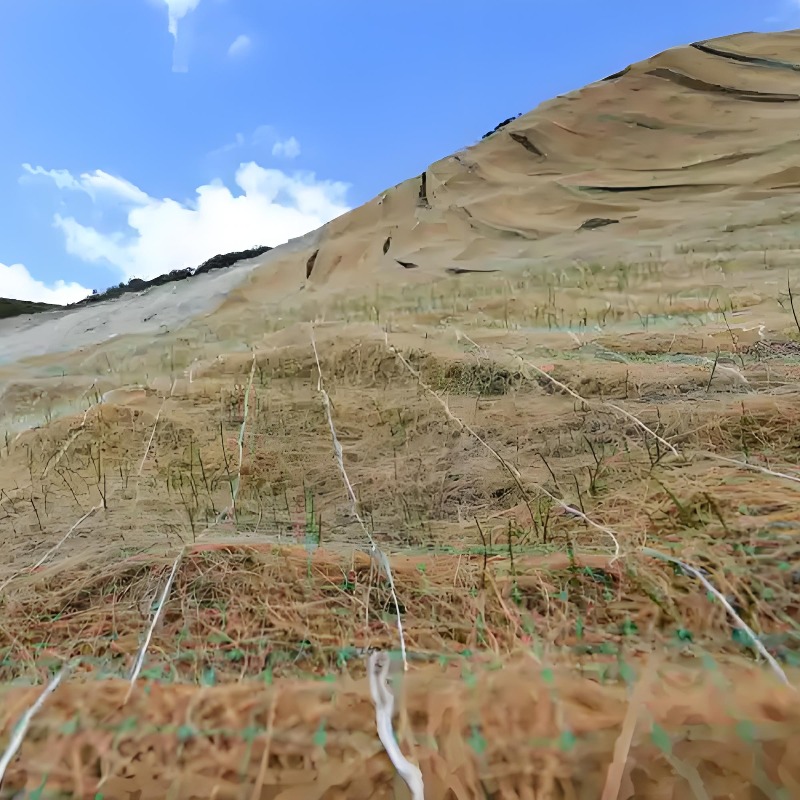
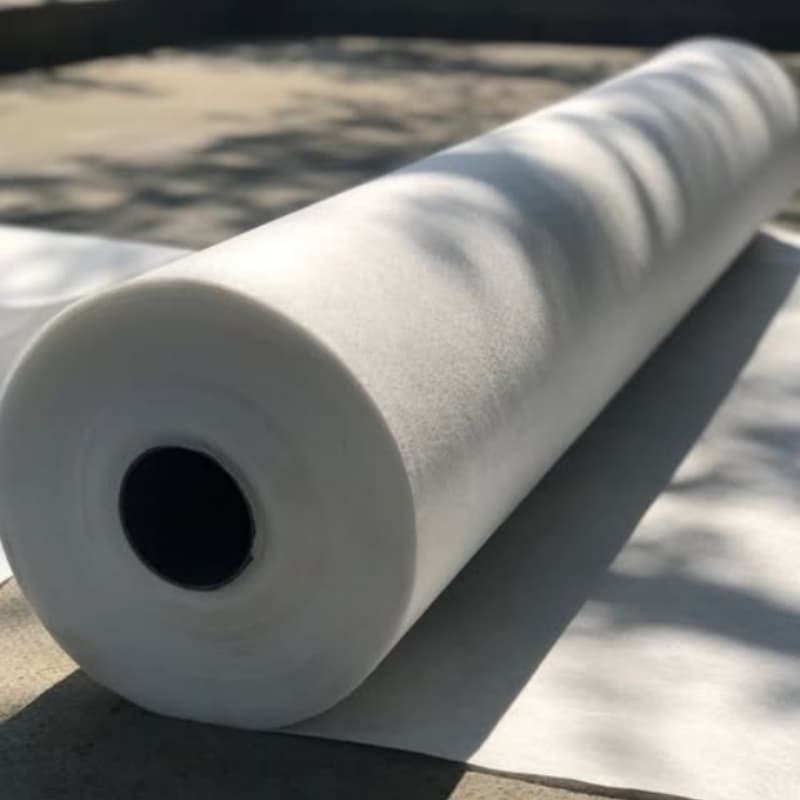
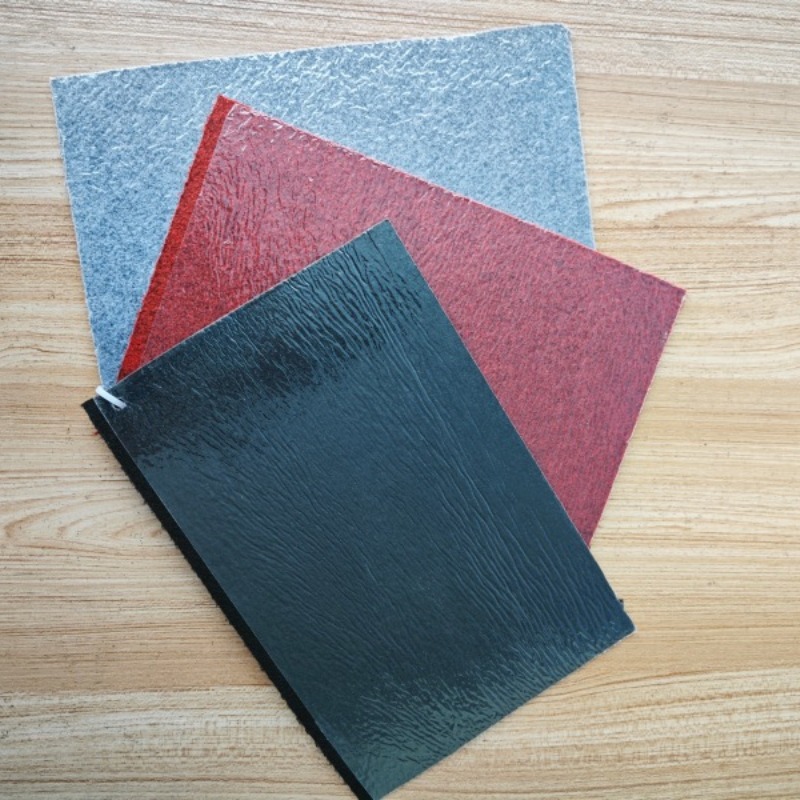
3D Geomat is a three-dimensional polymer erosion-control material designed for surface erosion control and vegetation establishment on exposed soil slopes. Unlike flat erosion-control materials, 3D Geomat has a three-dimensional structure that can retain surface soil and seeds while providing space for vegetation roots to develop.
For riverbanks, canal slopes, reservoir margins and other areas exposed to rainfall and surface runoff, 3D geomat for riverbank erosion control provides an ecological surface protection solution. 3D Geomat is commonly installed together with broadcasting, soil-covered seeding or hydroseeding. As vegetation develops, plant roots grow into the soil and contribute to the long-term resistance of the slope surface against erosion.
The basic mechanism can be described as: Surface Soil Retention → Seed Retention → Reduced Surface Erosion → Vegetation Establishment → Root Reinforcement.
After installation, the three-dimensional structure provides a physical framework on the soil surface. It reduces the direct impact of rainfall and retains soil particles and seeds on the slope. After seeding or hydroseeding, vegetation begins to establish within the three-dimensional structure. As plant roots develop into the soil, the vegetation and geomat work together to form a surface erosion-control system.
| Item | Refernce Specification |
| Thickness | ≥ 10-16mm |
| Width | 1m – 3m |
| Length | 5m – 30m per roll |
| Main Function | Surface erosion control, seed retention and vegetation establishment |
| Applications | Riverbanks, canals, reservoirs, drainage channels and slopes |
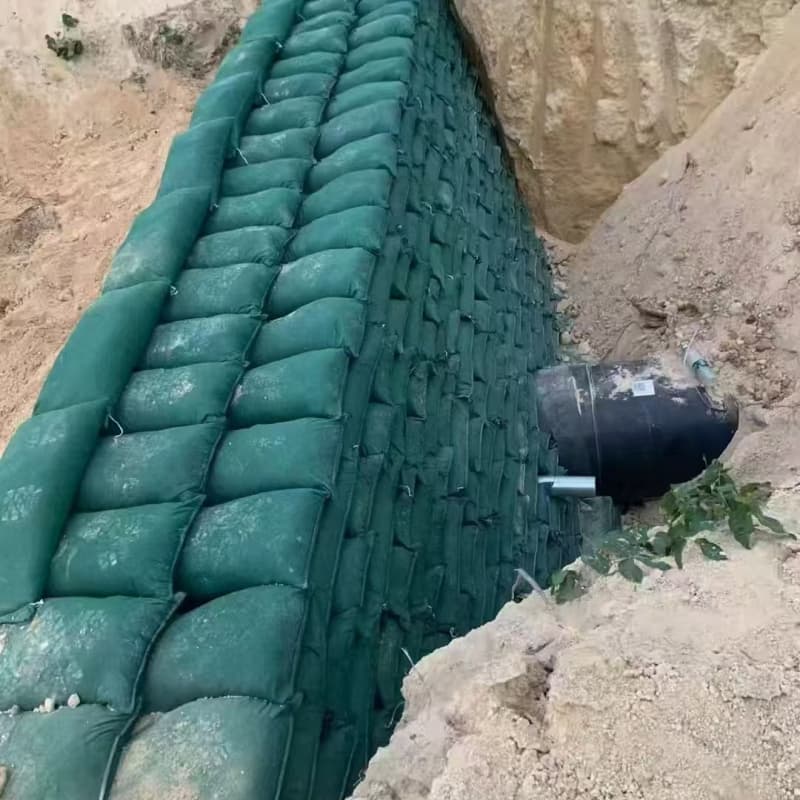
This project was located along the reservoir margins of the Porto Colômbia and Volta Grande Hydroelectric Power Plants in Brazil. The exposed reservoir banks were affected by water erosion, wind and wave action, and fluctuating water conditions, creating a risk of soil loss and sediment deposition in the reservoirs. The research established several experimental sections, with each section approximately 1.5–2 m high and about 150 m² in area. A three-dimensional geomat was used as the erosion-control material. The geomat consisted of a polyethylene (PE) three-dimensional structure and was combined with synthetic geogrid or sack-gabion protection in some sections. The geomat had an average thickness of 12.45 mm, mass per unit area of 563 g/m², tensile strength of 3.93 kN/m in the machine direction and 1.33 kN/m in the cross direction, with a void ratio above 90%.
To address the erosion problem, the reservoir margins were mechanically reshaped before installation, and the geomat was anchored to maintain close contact with the soil surface. In selected sections, the geomat was combined with sack gabions to provide additional erosion protection. The experimental sections were monitored from 2016 to 2020, using field performance evaluations and differential bathymetric measurements to assess erosion-control performance. The study reported long-term performance of the investigated geomat systems after approximately four years of field monitoring. In addition, it also highlighted that proper installation is important: insufficient contact between the geomat and soil or inadequate anchoring can negatively affect performance.
3D Geomat is suitable for riverbanks, canal slopes, reservoir margins and other exposed soil slopes where surface erosion control and vegetation establishment are required. Its three-dimensional structure retains surface soil and seeds while providing a suitable environment for vegetation development. When combined with appropriate anchoring, seeding or hydroseeding, it gradually forms a surface protection system supported by both the geomat structure and plant roots. For projects exposed to stronger hydraulic forces, steep slopes or structural stability concerns, additional materials should be considered to meet site conditions, such as geogrid, geotextiles, riprap or other engineered systems.
If you are looking for 3D Geomat for Riverbank Erosion Control, please provide the project area, slope dimensions, slope angle, soil and hydraulic conditions, as well as the destination port or delivery address. NUOKUN can recommend the suitable product specification to meet the project requirements.
Q1. Is 3D Geomat suitable for riverbank erosion control?
Yes. Its three-dimensional structure retains surface soil and seeds while providing space for vegetation roots to develop.
For normal rainfall and surface-runoff erosion, 3D Geomat provides an ecological surface protection solution. However, areas exposed to high-velocity flow, severe scour or structural slope instability may require additional protection such as geogrid, riprap or other geosynthetics.
Q2. What materials and thicknesses are available for 3D Geomat?
3D Geomat products are commonly manufactured using polymers such as PP or PE. Thickness, mass per unit area, tensile strength and void ratio vary between manufacturers and product models. Some products are available in thicknesses of approximately 10–18 mm. However, thickness should not be the only selection criterion. Slope angle, soil conditions, rainfall, surface runoff, hydraulic conditions and vegetation requirements should also be considered.
Q3. Does 3D Geomat need to be combined with seeding or hydroseeding?
It is commonly used together with vegetation establishment. The geomat provides the surface protection structure, while seeds can be applied through broadcasting, soil-covered seeding or hydroseeding. As vegetation develops, plant roots grow into the soil and provide additional resistance against surface erosion. Therefore, 3D Geomat is generally used as part of an integrated system involving soil, seeds, vegetation and anchoring rather than as an isolated material.
Q4. Can 3D Geomat remain submerged in water for a long time?
This depends on the specific product and project conditions. Standard 3D Geomat is mainly intended for exposed soil slopes rather than permanent underwater protection. If the material will be exposed to continuous high-velocity flow or strong wave action, the hydraulic conditions should be evaluated and a suitable integrated protection system should be selected.
Tinggalkan pesan
Scan to Wechat/Whatsapp :



 English
 Français
 Deutsch
 Русский
 Español
 Português
 عربي
عربي Tiếng Việt
 Indonesia
 हिन्दी


 IPv6 DUKUNGAN JARINGAN